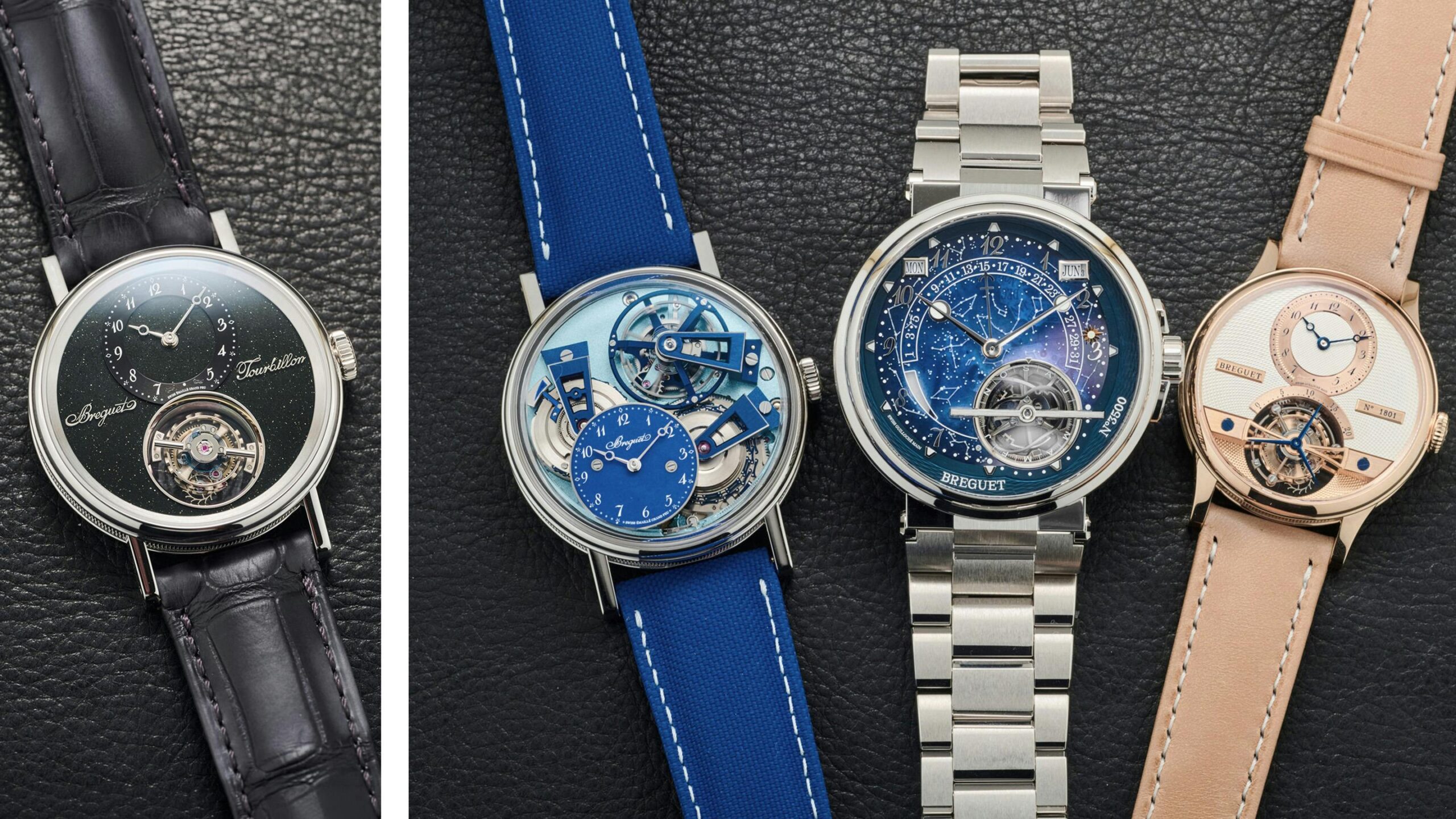
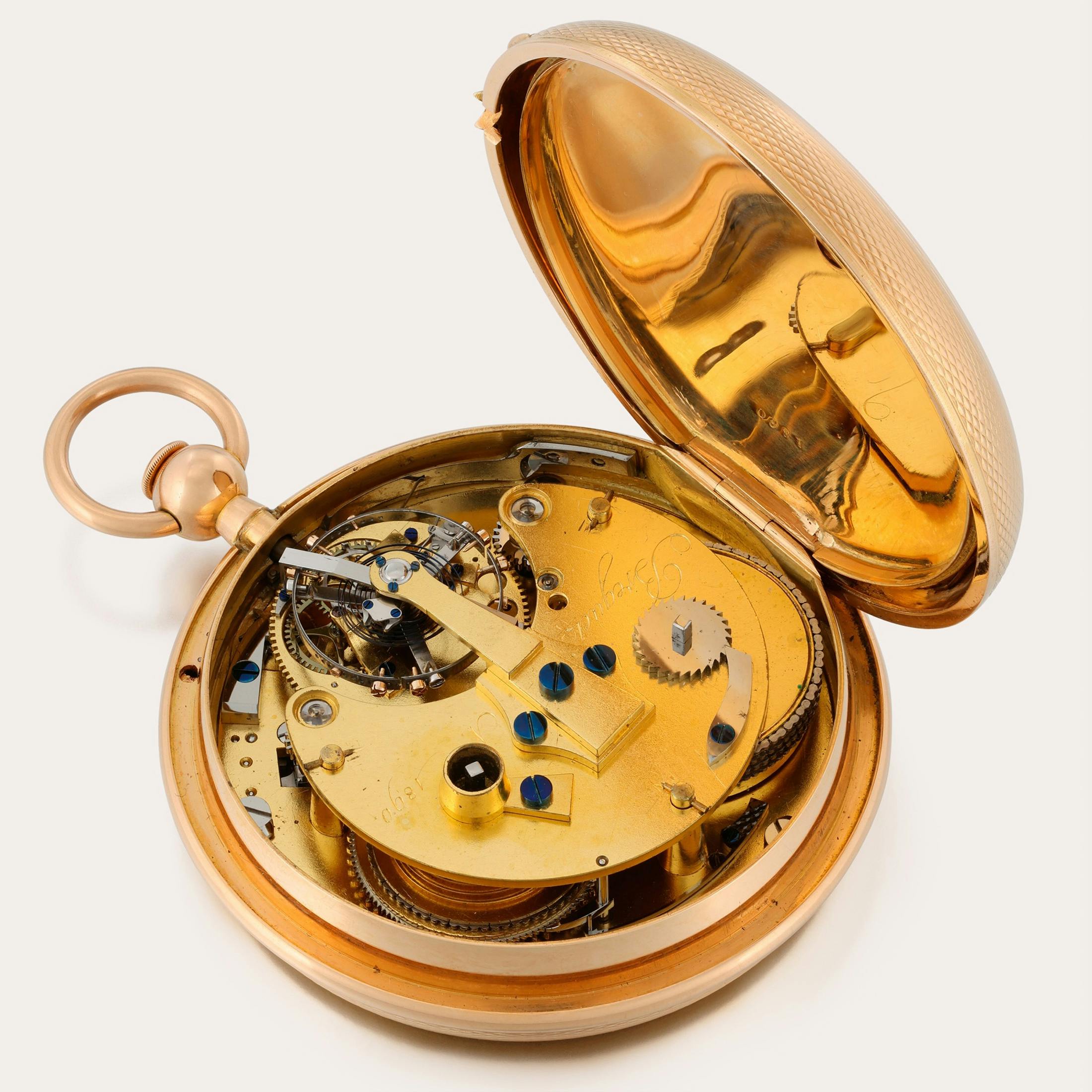
On June 26, 1801, Abraham-Louis Breguet was granted the patent for the tourbillon — a regulating device that places the escapement and balance wheel inside a rotating cage to counteract the effects of gravity. Exactly 225 years later, on June 26, 2026, Breguet released four new references to mark the anniversary. All four are platinum. All four carry tourbillon movements. And each one presents a genuinely different answer to the question of how that complication should be housed, displayed, and finished in 2026.
Classique Tourbillon Sidéral 7255PT: Flying Tourbillon in Black Aventurine
The Classique Tourbillon Sidéral 7255 was originally unveiled as part of Breguet’s 250th brand anniversary collection, at that time in Breguet gold with a blue dial. It was the brand’s first flying tourbillon, distinguished by a lower bridge and lower support of the tourbillon carriage made from sapphire glass, which renders the mechanical connection between the gears and carriage effectively invisible. The tourbillon appears to float above the dial surface.
For the 225th anniversary edition, the reference moves to a platinum case measuring 38mm in diameter and 10.2mm thick. The case retains the fluted caseband and straight, welded lugs with screws that characterize the Classique line. The dial is black aventurine enamel, chosen to complement the cold tone of the platinum case. The chapter ring is crafted from gold with a black finish. All dial elements — hands, Breguet numerals, and appliques — are rhodium-plated. The flying tourbillon protrudes 2.2mm above the plate and 0.9mm above the enamel dial surface, a precise dimensional relationship that makes the complication legible without disrupting the dial plane.
The movement is calibre 187M1, a manual-winding tourbillon beating at 18,000 vph with a 50-hour power reserve and 23 jewels. It is built around Breguet’s calibre 588 and fitted with a blue Breguet Nivachron balance-spring. The caseback displays a Quai de l’Horloge guilloché mainplate in rhodium-plated 18K Breguet gold. The reference is a limited edition of 50 pieces, worn on a matte black alligator leather strap.
Tradition Tourbillon 7047PT: Fusée-and-Chain in Blue
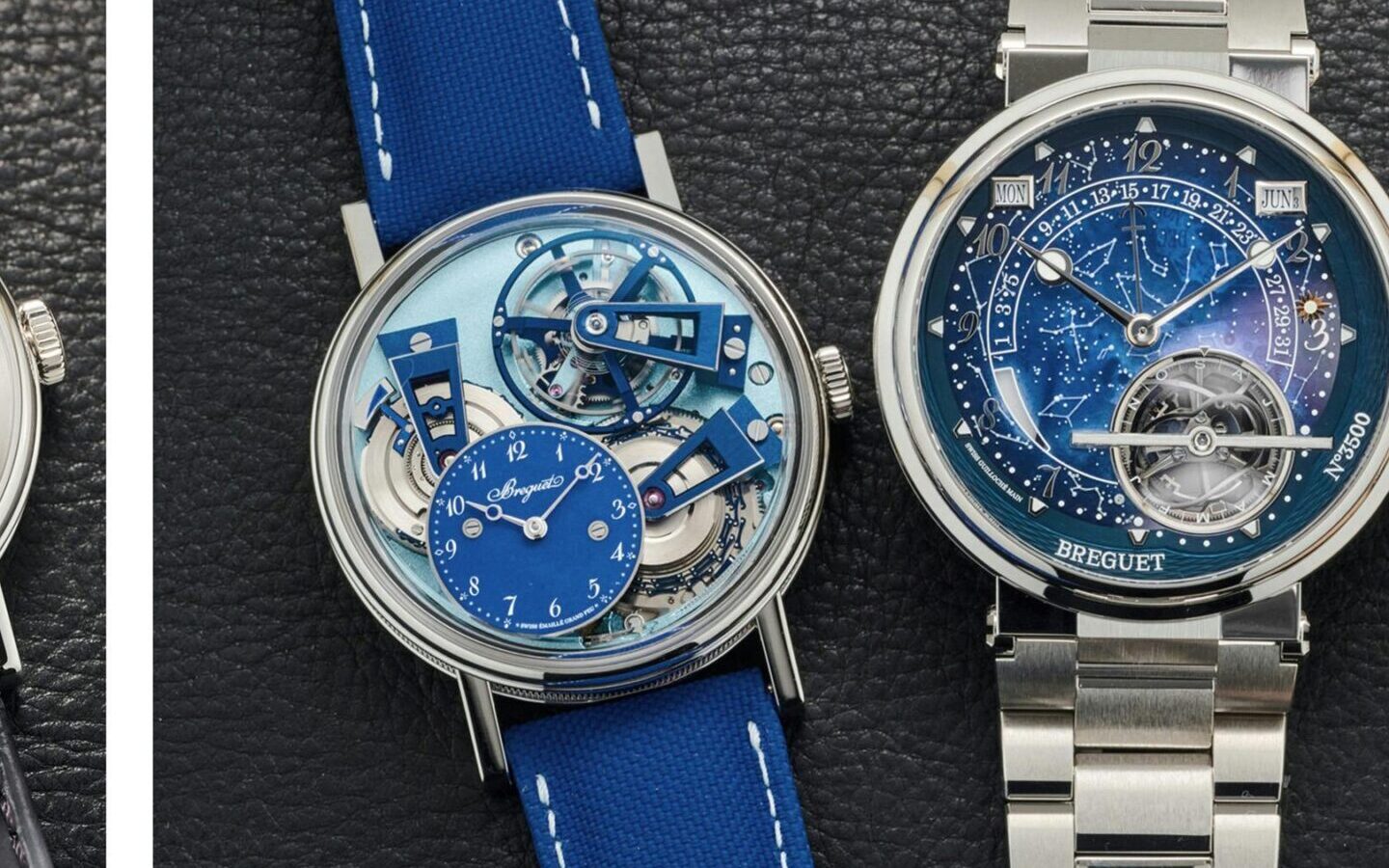
The Tradition Tourbillon 7047 is architecturally unlike the Classique references: the movement is displayed on the dial side, making the mechanical layout the primary visual statement. This edition pairs a tourbillon with a fusée-and-chain constant-force system — a mechanism that ensures even torque delivery throughout the power reserve by compensating for the declining tension of the mainspring.
The 225th anniversary version is housed in a 41mm platinum case, 16mm thick. Where previous editions of the 7047 have been presented in monochromatic grey, this reference introduces a strong chromatic identity. The dial and bridges are finished in Bleu de France. The mainplate carries a glacier blue background, creating a deliberate contrast between the two blue tones. The fusée-and-chain device itself is also finished in Bleu de France. In a considered detail, the traditional ruby jewel on the tourbillon bar has been replaced by a blue spinel to maintain chromatic consistency across the movement.
The movement is calibre 569. The chain is composed of 232 links. The movement beats at 2.5Hz and incorporates a one-minute tourbillon fitted with a silicon balance-spring. Power reserve is 55 hours. The watch is worn on a Bleu de France rubber strap with glacier blue topstitching. Production is limited to 25 pieces.
Marine Tourbillon Équation Marchante 5887: The Most Complicated Reference
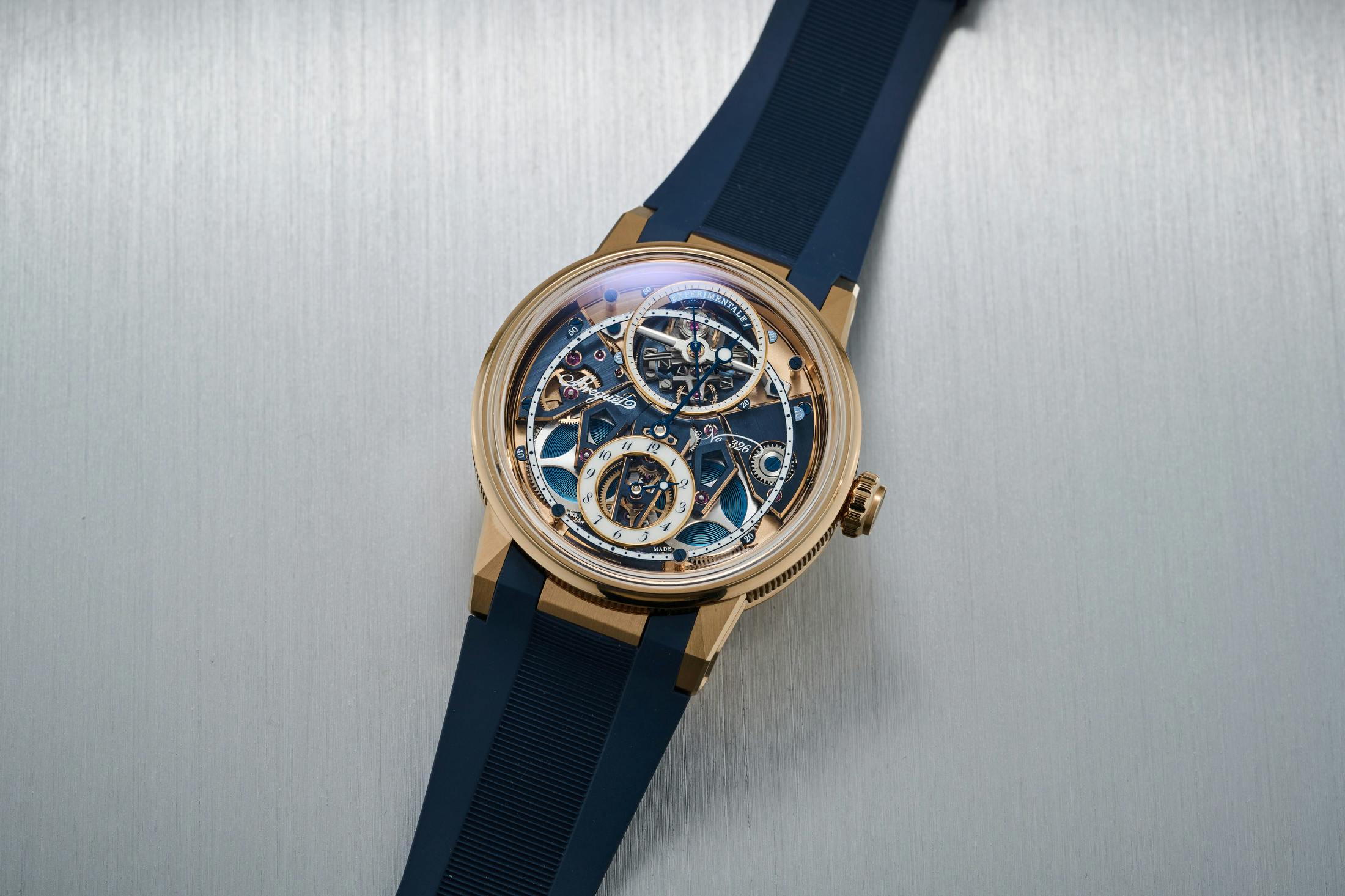
The Marine Tourbillon Équation Marchante 5887 occupies a different position in the collection entirely. Originally part of a generation released in 2017, it pays tribute to Breguet’s appointment as Horloger de la Marine Royale by Louis XVIII on October 27, 1815. The 5887 is described as the most complicated wristwatch in Breguet’s contemporary catalogue. For the 225th anniversary, the reference is presented in a full platinum case.
The complication combines a tourbillon with an équation marchante — a running equation of time display that shows the difference between mean solar time and true solar time as a continuous, real-time reading rather than a static indication. The integration of this complication with a tourbillon in a wristwatch case represents a significant technical and spatial challenge, and the platinum execution for this anniversary marks a material shift from earlier versions of the reference.
Classique Tourbillon 7357: The Fourth Reference
The fourth watch in the anniversary group is the Classique Tourbillon 7357, a 35mm reference that had been covered separately ahead of the main announcement. Its inclusion in the anniversary quartet rounds out a range that spans 35mm to 41mm in case diameter and moves across three distinct design languages — the restrained Classique, the mechanically expressive Tradition, and the technically ambitious Marine.
Four Watches, One Occasion
Taken together, the four references demonstrate how differently the same complication can be framed depending on case architecture, dial material, and movement display philosophy. The flying tourbillon of the 7255PT prioritizes visual lightness and surface refinement. The 7047PT makes the mechanics the subject. The 5887 layers complication upon complication. The 7357 brings the tourbillon to a 35mm format. Each is a limited edition in platinum, and each was released on the precise calendar date of the original 1801 patent grant.